

As caseloads grow and competition increases, many attorneys are looking for ways to work more efficiently without compromising the quality of the services they provide. To meet this need, many firms are turning to a new generation of AI-powered tools built to assist with legal case management.
AI case assistants support the everyday realities of legal work. They help teams locate case details faster, surface relevant context, and consistently synthesize information across documents, notes, and communications. Instead of jumping between systems or manually digging through files, lawyers can spend more time reviewing facts, preparing a strategy, and engaging with clients.
This article provides an overview of AI legal case management tools, including what legal AI assistants do, how they differ from general-purpose tools, and why they are becoming a practical addition to modern law firm workflows. We’ll also examine how these tools help firms work more effectively within the systems they already use.
What is AI for legal case management?
AI legal case management tools enable legal teams to quickly find, summarize, and interpret information related to specific matters. These assistants support case work by extracting relevant facts and context from case files and other resources, and then presenting these findings in a clear, usable format.
Compared with general-purpose AI tools, legal case management AI assistants are optimized to work within the structure of a legal matter, making sense of key dates, materials, and case activity. Going beyond basic search and automation, AI case assistants help attorneys get oriented faster, build stronger arguments, and maintain a consistent view of progress and priorities across every case.
Traditional workflows
Some attorneys still rely on time-consuming manual effort to find the information they’re looking for. Tasks like preparing for meetings or reviewing case updates often require digging through numerous sources and disconnected systems. These extra steps cause delays, increase the risk of missing important details, and reduce overall efficiency.
AI-enhanced workflows
AI changes this dynamic by organizing and connecting case data behind the scenes. Instead of searching across systems, lawyers can access summaries, timelines, and important details drawn directly from their case information. This reduces friction, supports faster decision-making, and allows teams to work more efficiently without changing how they practice law.
Key challenges lawyers face around case management processes
Firms encounter a number of constraints when managing growing caseloads, including issues that can slow work, strain teams, and make it difficult to maintain consistency across matters.
Time-consuming information searches
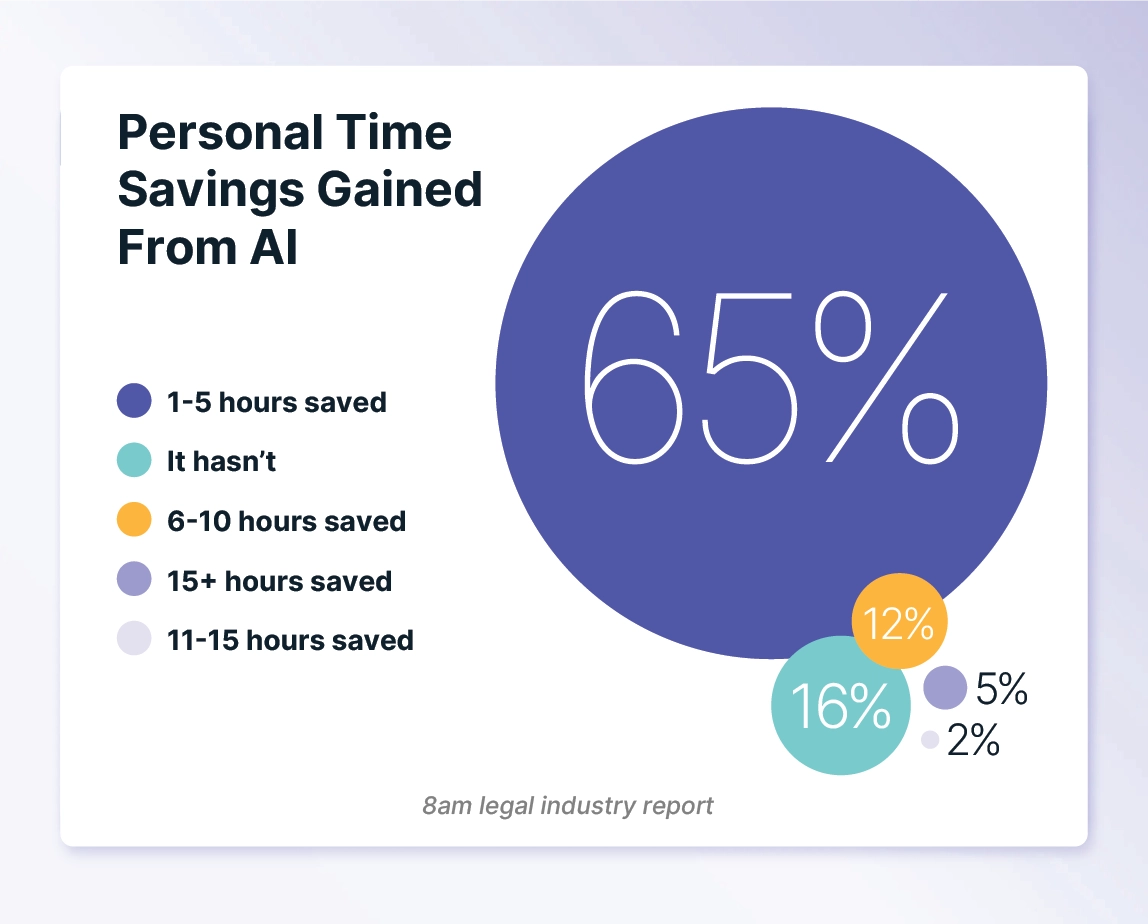
Legal teams lose valuable time tracking down information scattered across emails, documents, and software platforms. This disrupts momentum and makes it harder to keep cases moving forward. AI tools are already starting to change that. According to the 8am 2025 Legal Industry Report , 65% of lawyers who use AI say it helps them save one to five hours per week—time that can be redirected toward client work, case strategy, and higher value tasks.
Limited team capacity
Expanding a team is rarely a quick fix. Recruiting takes time, and new hires often require extensive onboarding before they can fully contribute. During that ramp-up period, existing staff absorb additional work, which can slow progress and make it harder for firms to respond to increased demand.
Inconsistency across cases
When information is stored in different places or is documented unevenly, teams struggle to maintain a shared understanding of each case. Important context can be missed, work may be duplicated, and client experiences can vary depending on who is handling the matter. Over time, these inconsistencies make it harder to deliver reliable, high-quality service at scale.
How AI assistants improve case management workflows
AI case management assistants streamline everyday work by making information easier to retrieve, interpret, and apply. The result is smoother workflows, clearer visibility, and fewer bottlenecks as cases move forward. Below is a closer look at some of the key features of legal AI assistants:
Smart case file search
AI case assistants simplify the process of locating information across a matter, which creates advantages such as:
-
Quick access to precise facts, documents, messages, and data points relevant to a specific case
-
Less time spent navigating multiple systems or rechecking files
-
Greater confidence that relevant information hasn’t been overlooked
Rapid case insights
With tools for AI legal case analysis, legal teams can move quickly from raw information to actionable insights, providing firms with:
-
Helpful summaries of facts and developments across each matter
-
Faster analysis of patterns and relationships within data
-
More time for strategy development and client communication
Knowledge management and faster onboarding
With the help of legal AI case management assistants, firms can share knowledge more effectively and reduce reliance on individual experience. This facilitates:
-
Easier access to institutional knowledge across cases and teams
-
Faster ramp-up for new hires through clearer visibility into case history
-
More consistent work quality without without needing additional resources
Timeline and chronology creation
AI case assistants bring structure and clarity to the review and validation of case events. This offers benefits such as:
-
Clear timelines of case activity across documents and communications
-
Direct links to original sources for easier verification
-
Easier assessment of progress and next steps at any stage of a case
Tips for evaluating AI assistants for your legal practice
As more AI legal case management tools enter the market, choosing the right solution requires more than checking off a list of features. You’ll likely have more success with assistance that naturally integrates into how your team already works, supporting day-to-day tasks without forcing major changes to existing processes.
When evaluating AI case assistants, it helps to look at how well each tool supports everyday legal work and whether it can handle the types of matters your firm manages most often.
Built for legal workflows
AI tools designed specifically for legal work reflect the constraints and responsibilities inherent in practicing law. This includes an understanding of compliance requirements, professional standards, and safeguards for preventing misuse. General-purpose AI tools may lack the domain awareness needed to manage legal cases with consistency and ensure client confidentiality.
Integration with case management software
AI legal case assistants are most effective when they integrate with the systems that legal professionals already use. With an AI assistant embedded directly in your firm’s case management software, you can avoid having to transfer files across multiple platforms. This allows your team to access case insights in a familiar environment without disrupting established workflows. You can also pull in information that may be stored outside of case documents, such as notes, calendar events, and assigned tasks, giving you a more complete set of case data.
Powered by your existing case data
The best results come when legal AI is built on your existing case data—not pieced together through manual uploads from other sources. When legal AI assistants are working from real case data, firms get results they can trust—and a clearer picture of what’s happening across matters.
The future of AI in legal case management
As AI continues to mature , its role in legal case management is shifting from reactive support to proactive guidance. Rather than simply responding to questions or retrieving information on demand, newer AI tools are getting better at tracking patterns across matters, flagging emerging issues, and pointing teams toward next steps earlier in the lifecycle of a case. This shift allows legal professionals to act with more foresight instead of responding after challenges arise.
Over time, AI case assistants will give firms an even broader view of developments across all of their active cases, unlocking more advanced applications, such as:
-
Early issue detection : Spot potential bottlenecks based on matter history and case timelines
-
Case trend analysis : Highlight shifts in volume, referral patterns, resolution times, and profitability across similar case types
-
Smart prioritization : Suggest next steps or flag tasks based on urgency, complexity, or team workload
-
Outcome forecasting : Use prior results to help inform negotiation strategy or resource allocation
-
Consistency tracking : Monitor variations in how tasks are handled across attorneys to support training and quality control
As these capabilities continue to develop, AI legal practice management tools will become increasingly focused on improving firms’ long-term operational strength. This will allow attorneys to scale thoughtfully, improve reliability across their work, and deliver stronger client service without adding unnecessary complexity or headcount.
Explore 8am™ IQ for MyCase case assistant
AI case management doesn’t need to be abstract or complex. With 8am IQ , firms can put these tools to work inside MyCase, using AI assistants that are built for everyday legal tasks and grounded in case data.
Each assistant is designed to save time, improve focus, and make it easier to stay on top of case information as matters progress. Instead of working across disconnected platforms or piecing together details from multiple sources, legal teams can rely on built-in tools that keep everything organized and easy to access.
Here’s how the AI assistants in 8am IQ support different parts of the legal workflow:
-
Case assistant : Helps attorneys quickly find answers, review case timelines, and understand what’s happening across a matter without sorting through scattered notes or files
-
Document assistant : Summarizes long documents, highlights key clauses, and turns PDFs and scanned files into structured, searchable summaries
-
Discovery assistant : Uses OCR to turn scanned PDFs, images, and handwritten notes into searchable, structured text, making older and inherited files usable without manual re-entry
-
Writing assistant : Refines written work from emails to filings, improving clarity, tone, and consistency without pulling attorneys out of their workflow
Assistants are powered by your firm’s actual case data—not the open web—so every result is private, traceable, and relevant to the matter at hand.
Schedule a demo of MyCase today and explore how 8am IQ can support your team’s efficiency, consistency, and growth.
Legal case management AI FAQs
About the author

Rob Heidrick is a Senior Content Strategist for 8am, a leading professional business solution. He covers the latest advancements in legal technology, financial wellness for law firms, and key industry trends.